
The fire at Gul Plaza on MA Jinnah Road, Karachi on Jan 17, 2026 was a painful wake-up call. The inferno claimed over 73 lives and destroyed nearly 1,200 shops. It was not just a small accident. In fact, it exposed how weak fire safety is in many commercial buildings across Pakistan.
This incident reminds us that fire preparedness is not just about equipment. Instead, it is about awareness, maintenance and training. So every shop owner in Karachi, Lahore and Islamabad must learn from it.
Why Fire Safety Needs Attention in Pakistan:
After most commercial fires, experts find the same gaps. For example, emergency exits are blocked or locked. In addition, smoke detectors are missing or not working. Similarly, fire extinguishers are old and have no service. As a result, staff do not know what to do.
From 2016 to 2026, many campaigns focused on better enforcement. However, the Gul Plaza tragedy shows more work is needed. According to the judicial commission, the failure covered all three parts of safety – prevention, detection and firefighting.
What Went Wrong at Gul Plaza?
- Locked Exits: Police found 15 of 16 exits were locked on the night of fire. This was a routine practice.
- No Safety System: The building had no working hydrants, hose reels, fire pumps, sprinklers or alarm.
- Old Violations: KMC audit in 2021 and Civil Defence inspections in 2024-25 had already flagged these gaps.
Following this, Sindh government audited 3,633 buildings.The survey found more than 91% lack proper fire safety arrangements. Therefore, this is a province-wide issue.

A Final Wake-Up Call for Shop Owners:
For shop owners, this is a final wake-up call. You cannot rely on luck. For instance, a certified extinguisher costs less than your monthly rent. However, it can stop a fire in the first 30 seconds. That one step can save lives.
So what should you do now?You need a complete system, not just one cylinder
Why STS Traders Focuses on a Complete Safety System:
This is where STS Traders comes in as a practical solution. We work with shops in Karachi, Lahore, Islamabad, Rawalpindi, Sargodha, Faisalabad, Gujranwala, Multan, Sialkot, and Azad Kashmir. We often see old, unserviced cylinders that may not work when needed.
We Follow 3-part system:
Detection:
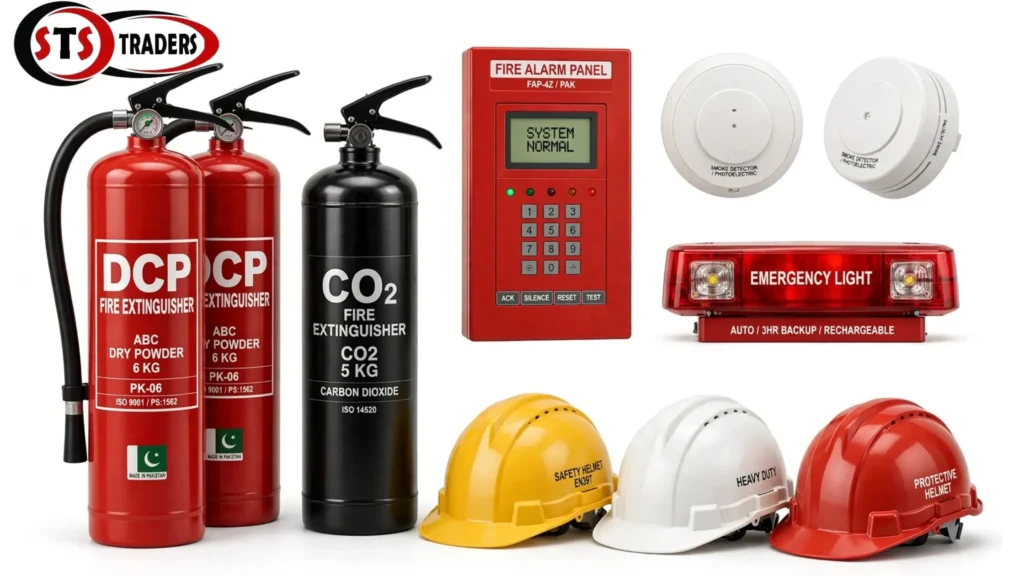
Early Warning First, you need early warning. We supply smoke detectors and fire alarm panels. They alert you before smoke fills the premises. So you get extra time to act and evacuate.
Suppression:
The Right Tool Second, you need the right extinguisher. The right choice depends on your risk.
- DCP: Best for general use in garment shops and offices.
- CO2: Best for electrical risks in shops with heavy wiring.
- Foam: Best for liquid fuel risks.
- Wet Chemical: Best for kitchen oil fires in restaurants.
Evacuation:
Safe Exit Third, you need a safe exit. Emergency exit lights and sirens with battery backup help during power outages. They guide people out even in dark and smoke.

Training Essential For Every Shop and Plaza in Pakistan
We Train You, Not Just Sell:
Buying equipment is step one. However, knowing how to use it is step two. Our team explains the standard PASS method. It is simple: Pull the pin, Aim at the base, Squeeze the handle, and Sweep side to side. In addition, we provide guidance on assessing your space and understanding local compliance.
Your Next Steps for Compliance and Safety:
Fire safety rules in Pakistan are managed by local authorities and Civil Defence. Moreover, requirements can vary by city and building type. Therefore, it is advisable to contact your local authority for the latest checklist. The national reference is Building Code of Pakistan – Fire Safety Provisions 2016.
For Homes:
Keep a 2kg DCP extinguisher in your kitchen. Also, add a smoke detector in the hall. Many fires start from oil or a short circuit. So check your wiring and gas pipe twice a year.
For Small Shops in Saddar or Tariq Road:
If you run a small shop, you need more. Place a 6kg DCP unit near the exit. In addition, install one emergency light. Most importantly, never lock your exit during work hours. Keeping the exit clear can save lives.
For Factories and Warehouses:
For factories in Faisalabad, Gujranwala, Sialkot, and Sundar Industrial Estate Lahore, you need larger systems. For example, you typically need hydrants, hose reels, and trolley-mounted units. Finally, zoned fire alarm panels with regular servicing are also recommended.
Monthly Safety Checklist: Do This Every 30 Days:
Test your equipment each month. First, check the pressure gauge. It should be in the green zone. Second, replace weak batteries in detectors and emergency lights. Third, train your staff and do a 2-minute drill.
However, do not buy cheap, uncertified cylinders from the local market. They often fail under pressure and the gauge shows fake pressure. At STS Traders, we help you stay safe and legal with certified products, delivery, refilling and hands-on training across Pakistan.
FAQs:
What were the main reasons for failure at Gul Plaza Karachi in 2026?
The judicial commission found 15 of 16 exits locked, no working hydrants, sprinklers or alarm, and no evacuation plan.
Where can I buy certified fire safety equipment in Pakistan?
You can buy DCP, CO2, Foam and Wet Chemical extinguishers, smoke detectors and emergency lights from STS Traders at ststraders.com with delivery to all major cities.
What is the fire safety compliance rule for shops in Punjab and Kashmir?
Compliance is managed by local development authority and Civil Defence. Contact your local office for latest checklist and refer to FSP 2016.
Which fire extinguisher is best for restaurants and shops in Pakistan?
Restaurants need wet chemical for kitchen plus DCP for general area, while most shops start with 6kg DCP near exit.
How much of Karachi buildings failed the fire safety audit after Gul Plaza?
SBCA audit of 3,633 buildings found over 91% lacked proper fire safety arrangements, with 90% failure in three major Karachi districts.
Leave a comment
Your email address will not be published. Required fields are marked *